


Diamonds aren’t forever any more
Diamonds aren’t forever any more

Sean ThomasTue, October 20, 2026 at 10:05 AM UTC
0
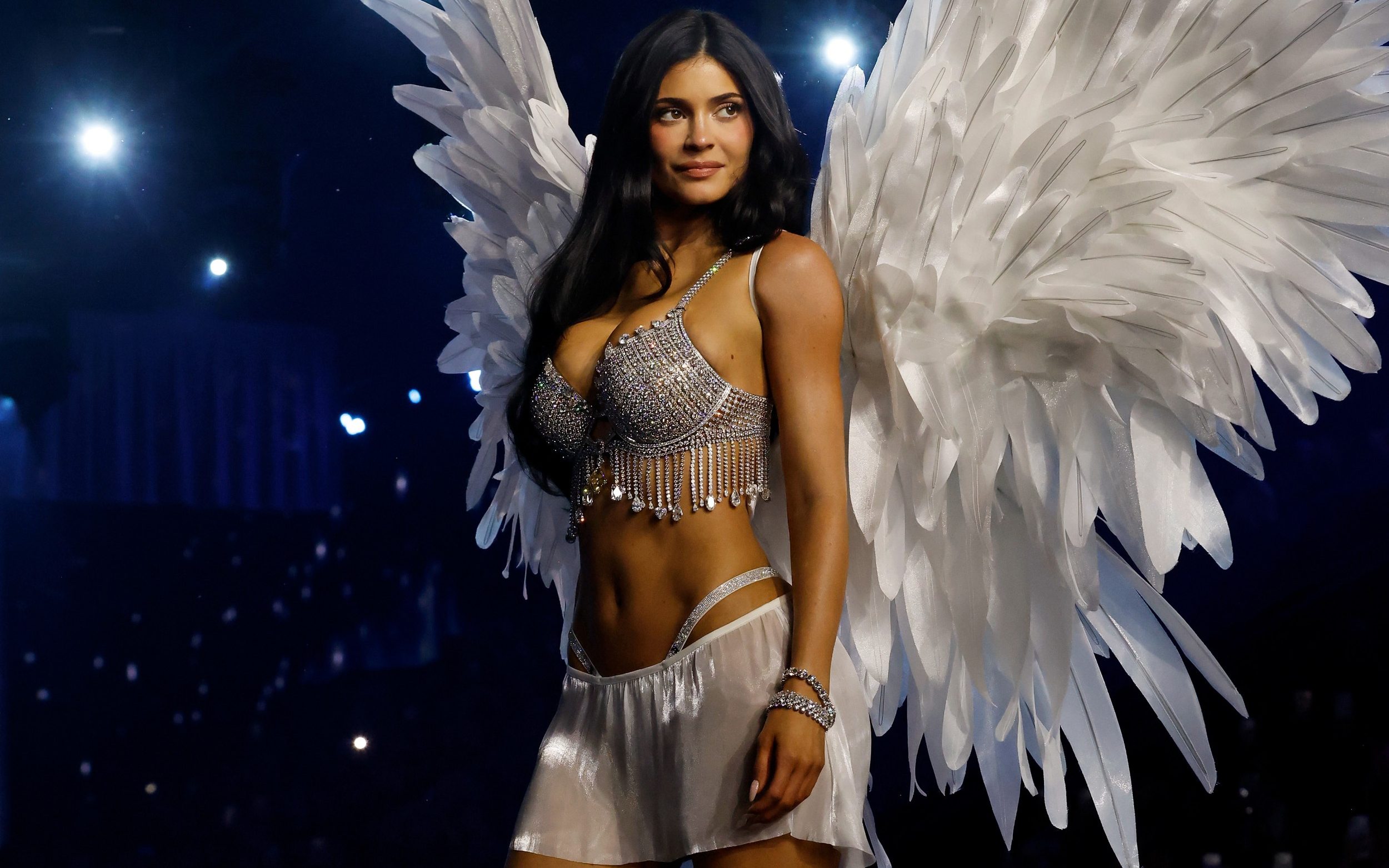
Kylie Jenner walked the Victoria’s Secret runway in a bra made of 4,410 diamonds - Getty Images/Kevin Mazur
In the shared folklore of the advertising industry, the phrase “a diamond is forever” is regarded as the Koh-i-noor of marketing slogans. It was first devised in 1947 by Frances Gerety, a Philadelphia copywriter working for the diamond company De Beers, and it did something new and remarkable: it invented a tradition.
Before Gerety, the diamond engagement ring was a minority taste. After, it was a moral obligation, priced at two months’ salary, a tariff fiercely enforced by mothers-in-law. Now, however, it seems like diamonds are actually for casual Tuesday drinks, or maybe for giving away in Christmas crackers. Consider the evidence.
On Sunday night, Kylie Jenner walked the Victoria’s Secret runway in a bra made of 4,410 diamonds, weighing 4lb and valued at $50m (£37m). Jacob & Co, who built it, called it the most valuable Fantasy Bra ever made. It may also be the last. Because the week Kylie strapped on her pressurised carbon, the company that owns De Beers was busy trying to flog the whole firm, the mines, the brand, the mystique, for about $1bn (£750m). De Beers was valued at $18bn (£14bn) in 2001.
The culprit is not a cartel, nor a change in taste. It is a small county in Henan province called Zhecheng, formerly famous for chilli peppers, which has quietly become the synthetic diamond capital of the world. China now produces around 95 per cent of all lab-grown diamonds, and Zhecheng alone cranks out 12 million carats a year.
These gems are not fakes. They are not cubic zirconia or Swarovski glass. They are diamonds, atom for atom, indistinguishable to the naked eye, and to most microscopes, from the stuff that took three billion years to cook under Botswana. The only difference is that one of them is old and the other has a surprising valuation: cheap.
Advertisement
Cheapness is winning. Wholesale lab-grown prices have fallen 96 per cent since 2018. You can buy a pair of lab-grown 0.1 carat diamond earrings now from around £100. Almost half of American engagement rings now contain a lab stone. Natural prices have dropped 40 per cent from their peak, India’s vast new diamond bourse in Surat has only 250 of its 4,700 offices occupied, and De Beers lost nearly $1.5m a day last year.
We have been here before. Napoleon III offered his most honoured guests aluminium cutlery, because it was so rare; the lesser guests had to make do with humble gold. Then chemists worked out how to refine aluminium; now we use it to wrap sandwiches. Meanwhile, Mikimoto’s cultured pearls did to Persian Gulf pearl divers in the 1920s what Zhecheng is doing to De Beers. These days the pearl survives mainly as something your grandmother wore to church. Scarcity is an accident, and modern technology can correct accidents.
All of which raises the amusing question of what comes next. Lab rubies and sapphires already exist. Cultured wagyu steak is on its way. AI will soon knock you up a Mozart sonata or a Shakespeare sonnet, probably by teatime. One by one the luxuries will become commodities, and the rich will retreat into the only thing that cannot be grown by labs and bots: human provenance. The dirt it came from, the hand that sculpted it, the richly coloured anecdote.

The fabled Koh-i-noor has a controversial history - AFP
Which is why the most famous diamonds may prove the exception. So much vivid cultural history has attached to them. The fabled Koh-i-noor, now in the British Crown Jewels, passed through Mughal, Persian, Afghan and Sikh hands, usually by means of torture or treachery, before the East India Company extracted it from a child maharaja in 1849 and transferred it to Queen Victoria. The Cullinan, at 3,106 carats the largest rough diamond ever found, was sent from Pretoria to Edward VII in 1905 by ordinary post, while a decoy travelled under armed guard on a steamer. Back in the day, kings killed for diamonds and empires went to war for them. You can manufacture a diamond; you cannot manufacture that history.
For that reason, some “great” diamonds might remain prized. But for the vast majority of ordinary diamonds the future is much less exciting. The market has collapsed and it is hard to see how it revives. Put it another way, diamonds are still forever (they remain basically indestructible). It was the price that was temporary.
Source: “AOL Money”
